
Dehumidifiers for Silverfish and Centipedes
As an Amazon Associate, I earn from qualifying purchases. Some links may earn us a commission at no extra cost to you.
Silverfish and house centipedes are commonly associated with damp areas, so controlling excess humidity can make basements, bathrooms, closets, and other moisture-prone spaces less favorable for them. A dehumidifier will not directly eliminate an existing infestation, but it can address one of the environmental conditions that attracts moisture-loving pests.
The right size depends on the room, moisture load, drainage options, and how continuously you expect the unit to run.
Top 7 Picks
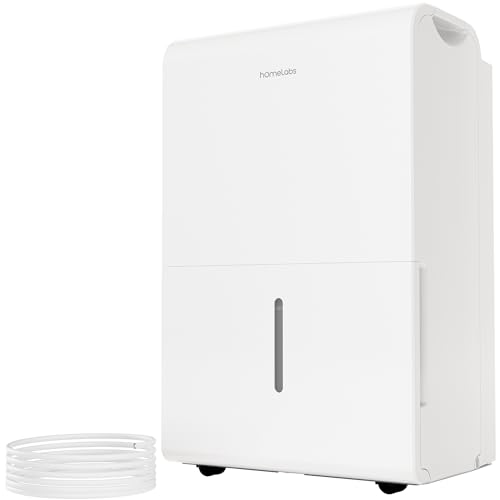
1. hOmeLabs 50-Pint Dehumidifier — Full-Size Home and Basement Unit
The hOmeLabs 50-pint model is a full-size option for larger rooms and basement-type spaces where a compact desktop unit would not provide enough moisture removal.
The original listing includes digital controls and a 24-hour timer, making it suitable for more continuous humidity management rather than occasional spot use.
Why consider it: Its 50-pint format fits households that need substantial moisture removal without moving into commercial equipment.
Pros
- 50-pint capacity class
- Designed for larger indoor spaces
- Digital controls
- 24-hour timer
- Large water-tank format
Cons
- Larger footprint than compact units
- More capacity than a small closet or bathroom may require
Trade-offs / Who should skip: A smaller dehumidifier is easier to place if your moisture problem is confined to one bedroom, bathroom, or closet.
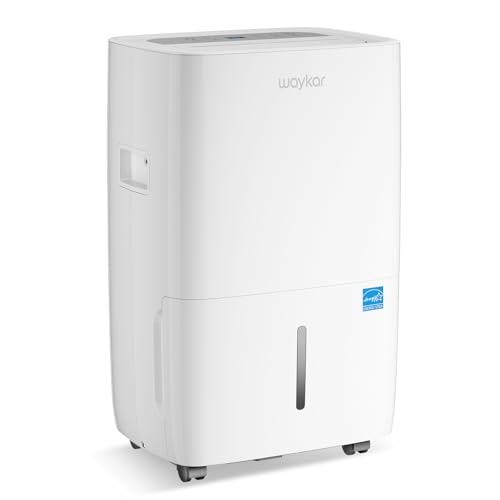
2. Waykar 80-Pint Dehumidifier — High-Capacity Large-Area Unit
The Waykar is rated for up to 80 pints of moisture removal per day and an advertised coverage area of up to 5,000 square feet.
Its listing includes humidity-control features, a drain hose, and automatic shutoff, making it more appropriate for larger or persistently damp spaces where frequent tank emptying would be inconvenient.
Why consider it: The higher capacity is useful for large basements or other substantial areas with recurring humidity.

Pros
- Up to 80-pint listed capacity
- Advertised for spaces up to 5,000 sq. ft.
- Humidity-control mode
- Drain hose included
- Automatic shutoff
Cons
- Larger than mid-size household units
- High capacity is unnecessary for small rooms
Trade-offs / Who should skip: A 22- to 34-pint model is more proportionate when moisture is limited to a smaller part of the house.
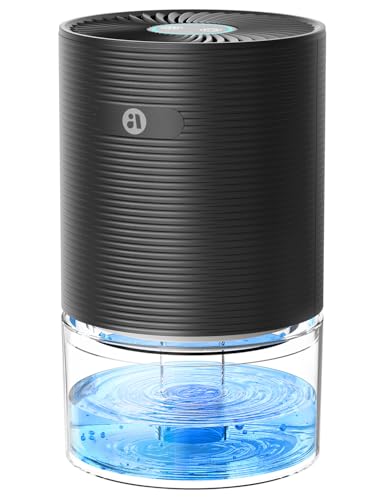
3. SANVINDER 25 oz Dehumidifier — Compact Small-Room Design
The SANVINDER is a much smaller unit aimed at bedrooms, bathrooms, closets, wardrobes, offices, and RV interiors.
Its listing specifies a 25 oz capacity, automatic shutoff, energy-saving operation, and advertised coverage of up to 285 square feet.
Why consider it: Its compact format fits localized damp areas where a floor-standing compressor dehumidifier would be unnecessarily large.
Pros
- Compact 25 oz format
- Advertised for spaces up to 285 sq. ft.
- Automatic shutoff
- Designed for small rooms and closets
- Listing emphasizes quiet operation
Cons
- Far less moisture-removal capacity than compressor models
- Not intended for whole basements or heavily damp large rooms
Trade-offs / Who should skip: Use a full-size compressor unit when humidity affects an entire basement or several connected rooms.
4. HUMILABS 22-Pint Dehumidifier — Mid-Size Unit With Flexible Drainage
The HUMILABS model sits between compact tabletop units and high-capacity basement machines. Its listing specifies 22-pint operation for spaces up to 1,500 square feet.
It supports both automatic and manual drainage and includes a 0.528-gallon water tank, 24-hour timer, and dry-clothes mode.
Why consider it: It provides a practical intermediate size for bedrooms, living areas, and smaller basements.

Pros
- 22-pint listed capacity
- Advertised coverage up to 1,500 sq. ft.
- Automatic or manual drainage
- 24-hour timer
- Dry-clothes mode
Cons
- Smaller tank than high-capacity floor units
- Less suited to very large, persistently damp basements
Trade-offs / Who should skip: Move up to a 50- or 80-pint model if humidity remains high across a much larger area.
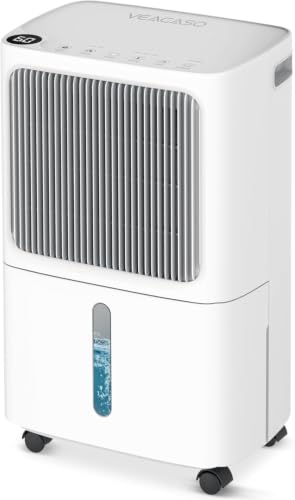
5. VEAGASO 34-Pint Dehumidifier — Quiet Mid-Size Humidity Control
The VEAGASO is rated at 34 pints per day for spaces up to 2,500 square feet.
Its listing includes a drain hose, three operating modes, a 24-hour timer, intelligent humidity control, a 0.53-gallon tank, and a stated 40 dB noise level.
Why consider it: It balances more moisture-removal capacity than small-room units with features suited to bedrooms and other occupied spaces.
Pros
- 34-pint listed capacity
- Advertised for up to 2,500 sq. ft.
- Drain hose included
- Three operating modes
- Listed 40 dB operation
Cons
- Smaller tank than some large-room models
- Less capacity than 50- to 110-pint alternatives
Trade-offs / Who should skip: A high-capacity model is more appropriate when you are dealing with substantial basement moisture rather than moderate room humidity.
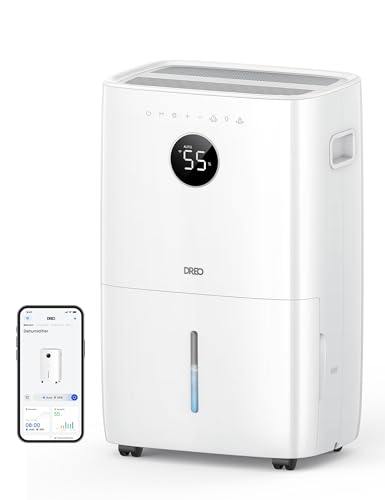
6. DREO 110-Pint Smart Dehumidifier — High-Capacity Unit With Large Tank
The DREO 711S is listed at 110 pints for spaces up to 4,500 square feet and includes a two-gallon water tank.
Its three listed operating choices—Auto, Comfort, and Constant—provide different ways to manage humidity, while an included drain hose supports continuous drainage.
Why consider it: The combination of high listed capacity and a two-gallon tank suits large rooms that need sustained moisture control.
Pros
- 110-pint listed capacity
- Advertised for up to 4,500 sq. ft.
- Two-gallon water tank
- Auto, Comfort, and Constant modes
- Drain hose included
Cons
- Large capacity comes with a larger appliance footprint
- Excessive for small bedrooms or closets
Trade-offs / Who should skip: Smaller models are more practical when the damp area is limited to a bathroom, closet, or one modest room.
7. Abestorm 70 PPD Dehumidifier — Crawl-Space Unit With Pump
The Abestorm is designed differently from conventional upright household dehumidifiers. Its compact commercial-style housing is intended for crawl spaces and basements.
The listing specifies 70 PPD performance, coverage up to 1,000 square feet, a built-in pump and hose, automatic defrost, memory restart, and a five-year limited warranty.
Why consider it: Its pump-equipped crawl-space design is useful where continuous drainage and low-clearance placement matter more than living-room appearance.

Pros
- 70 PPD listed capacity
- Built-in pump and hose
- Designed for crawl spaces and basements
- Automatic defrost
- Memory restart
Cons
- More specialized than a standard household floor unit
- Commercial-style format is unnecessary for ordinary bedrooms
Trade-offs / Who should skip: Choose a conventional upright dehumidifier if the unit will primarily operate in a bedroom, living room, or other visible occupied space.
Quick Compare
- Full-size household moisture control: hOmeLabs 50-Pint
- Large-area 80-pint capacity: Waykar 80-Pint
- Closets and small rooms: SANVINDER 25 oz
- Up to 1,500-sq.-ft. spaces: HUMILABS 22-Pint
- Quieter mid-size operation: VEAGASO 34-Pint
- High-capacity large-room use: DREO 110-Pint
- Crawl spaces with pumped drainage: Abestorm 70 PPD
Final Verdict
For widespread basement or large-room humidity, the hOmeLabs and Waykar provide conventional high-capacity household formats, while the DREO adds a larger tank and higher listed moisture-removal capacity.
For smaller areas, the SANVINDER is designed around closets and compact rooms, while the HUMILABS and VEAGASO fill the middle ground between tabletop units and full-size basement machines.
The Abestorm has the most specialized role: crawl spaces and basement installations where a pump, drain hose, auto defrost, and compact commercial-style housing are useful.
Whichever size you choose, the goal is consistent humidity management rather than simply running the largest machine available. Moisture control can make damp areas less favorable to silverfish and centipedes, but persistent pest activity may also require sealing entry points, fixing leaks, and addressing other sources of moisture.
As an Amazon Associate, I earn from qualifying purchases.