
Best Raccoon Repellent for Your Yard
As an Amazon Associate, I earn from qualifying purchases. Some links may earn us a commission at no extra cost to you.
Raccoons are smart, food-motivated, and stubborn—so the best “repellent” is usually a startle + barrier approach (motion water), backed up with taste/scent deterrents around the exact entry points and trash areas.
Top picks
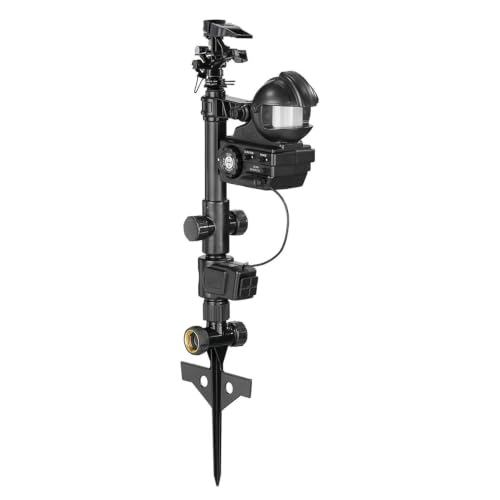
Orbit Yard Enforcer Motion-Activated Sprinkler — Best for keeping raccoons away from trash cans at night
If you can use a hose, this is my highest-confidence option because it conditions animals to avoid the area with a surprise spray.
Why it wins: Big coverage + reliable “startle” deterrent.

Pros
- Strong “startle” deterrent that discourages repeat visits
- Covers an approach path well (bins, garden edge, side yard)
- Set-and-forget once aimed and dialed in
Cons
- Needs hose + decent water pressure
- Can false-trigger in windy plants (trim/aim carefully)
Who should skip / failure cases
- If raccoons approach from above (roof/deck), add a second unit or move it to the approach path.
- If your hose/bib freezes often, you’ll want a winter backup (granules/spray).
Scores: Performance 5/5 • Coverage metric 5/5 • Ease of use 4/5 • Value 4/5
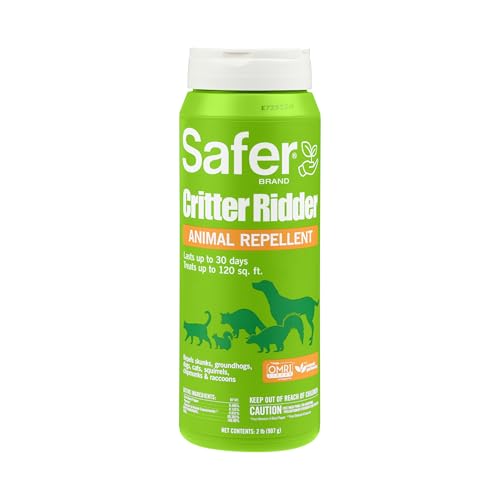
Safer Brand Critter Ridder Animal Repellent Granules (5926) — Best for targeting a specific hot spot
These granules are made for “apply where they walk” areas—think around trash pads, shed doors, and garden perimeters.
Why it wins: A practical, targeted way to make key zones unpleasant—especially when paired with cleanup and secure lids.
Pros
- Good for tight zones where raccoons step/sniff
- Simple application around the exact problem area
- Helpful “backup layer” with other deterrents
Cons
- Needs re-application after heavy rain/irrigation
- Not efficient for huge yards (coverage is limited)
Who should skip / failure cases
- If raccoons already get a big food payoff (open compost/pet food), they may ignore mild deterrents—fix attractants first.
Scores: Performance 4/5 • Coverage metric 3/5 • Ease of use 4/5 • Value 4/5
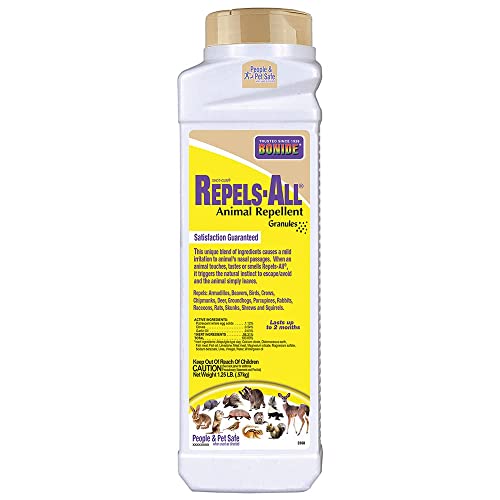
Bonide Repels-All Animal Repellent Granules — Best for making a wider perimeter unpleasant
If you need a broader “don’t come here” line around beds, decks, or bin areas, granules are often easier than constantly spraying.
Why it wins: Perimeter coverage with a simple apply-and-refresh routine.
Pros
- Easier perimeter treatment than daily sprays
- Good for garden edges, fence lines, and under-deck approaches
- Works well as a second layer behind motion-water deterrents
Cons
- Strong odor profile (apply away from seating areas)
- Needs periodic refresh and may wash down in storms
Who should skip / failure cases
- If you’re protecting a single trash can, motion water usually beats perimeter scent alone.
Scores: Performance 4/5 • Coverage metric 4/5 • Ease of use 4/5 • Value 4/5
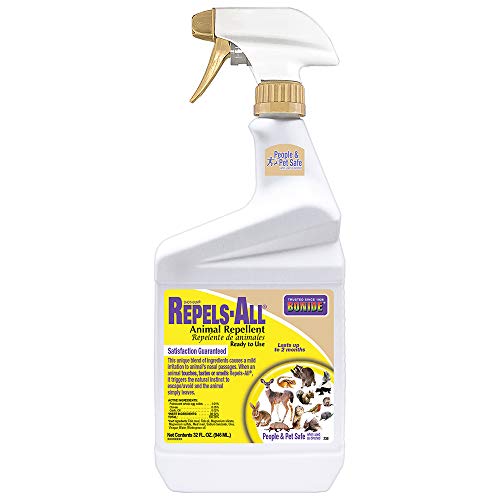
Bonide Repels-All Ready-to-Use Spray — Best for quick re-application on surfaces and entry points
I like a ready-to-use spray for touch-up defense: trash can lids, fence corners, deck stairs, and the exact path you see paw prints.
Why it wins: Fast to deploy for “high-touch” spots you can’t easily treat with granules.
Pros
- Fast “spray-and-go” for problem spots
- Useful after you clean up trash spills (re-mark the area)
- Great complement to granules for precision coverage
Cons
- Re-apply after rain, cleaning, or heavy dew
- Not efficient for large yards
Who should skip / failure cases
- If nightly bin raids are the issue, spray alone usually won’t beat a strong food reward—pair with locking lids + motion water.
Scores: Performance 3/5 • Coverage metric 2/5 • Ease of use 5/5 • Value 4/5
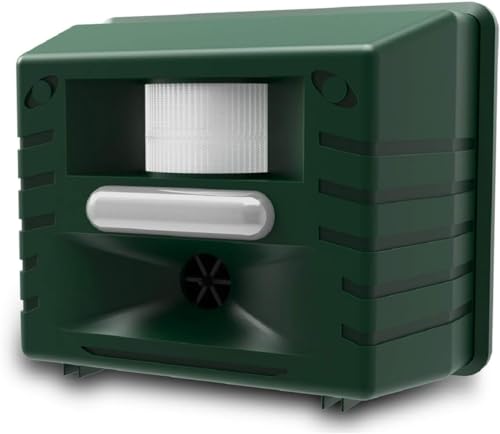
Aspectek Yard Sentinel Ultrasonic Repeller (with strobe) — Best for covered patios/garages where water isn’t practical
Ultrasonic devices are mixed, but this one adds multiple modes plus a night strobe, which can help in darker areas.
Why it wins: A low-maintenance, plug-in deterrent to try in semi-enclosed spots—best as a secondary layer.
Pros
- No chemicals and no hose needed
- Helpful in semi-enclosed spaces (sheds, eaves, covered decks)
- Can be used as an extra deterrent layer
Cons
- Effectiveness varies by layout and animal behavior
- Needs power planning (AC/batteries)
Who should skip / failure cases
- If raccoons are highly food-driven (trash/compost), ultrasonic alone often disappoints—use it as a secondary layer.
Scores: Performance 2/5 • Coverage metric 3/5 • Ease of use 4/5 • Value 3/5
Quick compare (table-free)
- Most effective “stop tonight” option: Orbit Yard Enforcer (motion water)
- Best for a single hot spot: Safer Critter Ridder granules
- Best perimeter treatment: Bonide Repels-All granules
- Best for touch-ups on surfaces: Bonide Repels-All RTU spray
- Best where water/chemicals aren’t ideal: Aspectek Yard Sentinel (secondary layer)
Buying guide (what actually works for raccoons)
- Remove the reward first: lock trash lids, rinse bins, remove pet food, secure compost. Repellents work much better when food isn’t easy.
- Match the tool to the job:
- Active intrusions (nightly raids): motion sprinkler on the approach path.
- Routine footpaths: granules on the walking line + refresh after storms.
- Point-defense: spray on lids, corners, steps, and entry points after cleaning.
- Use layers (best results): motion water + granules + touch-up spray.
- Re-apply intelligently: after heavy rain, after mowing/yard work, and after you see fresh tracks.
FAQs
What repellent works best for raccoons?
A motion-activated sprinkler is usually the most consistently effective because it startles and teaches avoidance, not just “smells bad.”
Do mothballs or ammonia work?
I don’t recommend them around homes, kids, or pets. Stick to purpose-made deterrents plus securing attractants.
Will ultrasonic repellents get rid of raccoons?
Sometimes they help, often they don’t—especially if food is available. I treat ultrasonic devices as a secondary layer, not the main solution.
As an Amazon Associate, I earn from qualifying purchases.